
Peoria, AZ Water Filtration: Best Whole-House Filter Locations
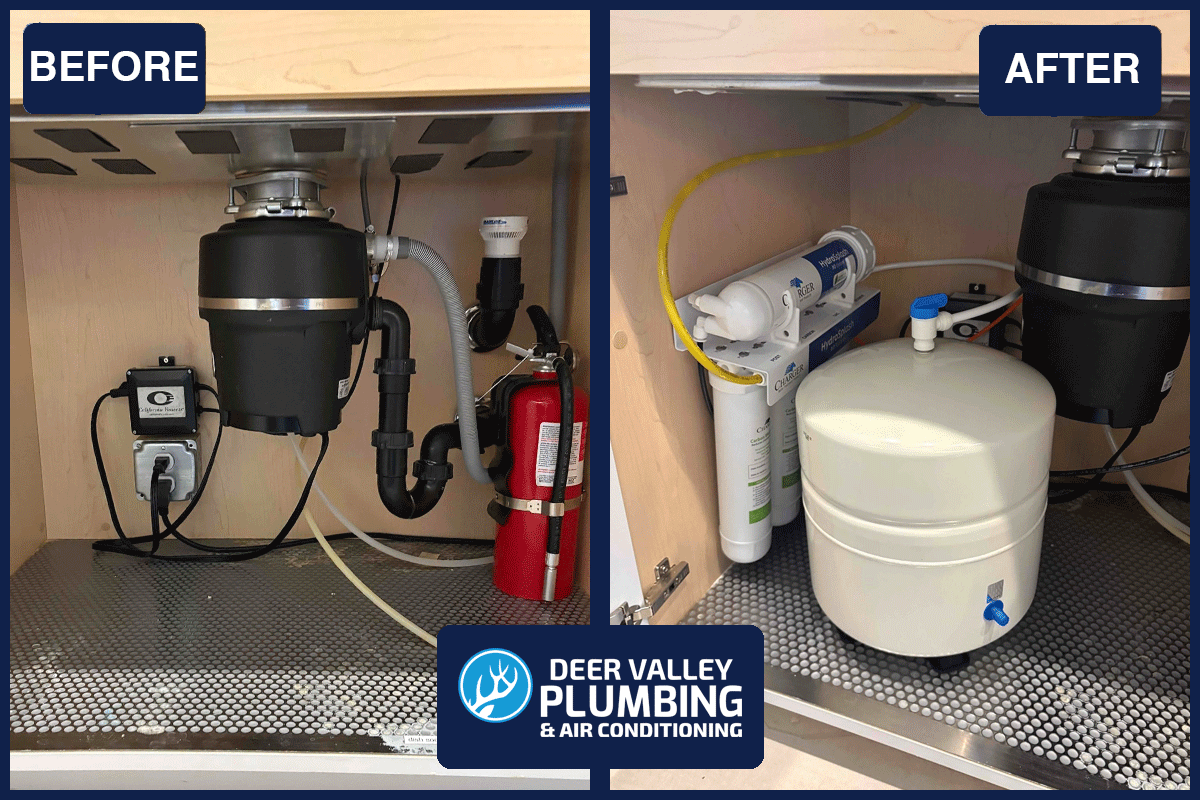
Where to install a whole house water filter is the single most important decision you will make for water quality, pressure, and long‑term reliability. In this guide, you will learn the exact placement strategy Phoenix homeowners use to protect pipes, fixtures, and drinking water. We will cover garage installs, exterior walls, bypasses, pressure, and how filters pair with water softeners and RO systems. Ready for expert help or a $45 assessment? We have same‑day appointments available.
What a Whole House Filter Does and Why Location Matters
A whole house filter treats every drop that enters your home’s plumbing. It captures sediment, chlorine, and other contaminants before they reach fixtures, clothes washers, dishwashers, and showers. The location you choose affects taste, pressure, appliance life, and how easy maintenance will be. A smart placement also reduces leaks and makes future upgrades simple.
Phoenix water is notoriously hard. Many neighborhoods see heavy scale buildup and noticeable chlorine taste. Municipal water can carry desert sediment, and seasonal changes shift water chemistry. A correctly placed filter protects your plumbing from day one and sets you up for pairing with a softener and an RO system at the sink.
The Golden Rule: Install After the Main Shutoff, Before Any Branches
The best spot is on the main cold‑water line immediately after the home’s main shutoff valve and pressure regulator, but before any branch tees feed fixtures or appliances. This ensures whole‑home protection and simplifies service.
Follow these guidelines:
-
Main line order of operations:
- City meter
- Exterior shutoff/pressure regulator (if present)
- Whole house sediment or carbon filter
- Softener or conditioner (if used)
- Interior distribution branches
-
Keep the filter in conditioned or shaded space when possible. Heat exposure shortens cartridge life and can stress plastic housings.
-
Use a full‑port bypass with three valves. You can isolate the filter, run water around it during service, and restore flow in minutes.
This simple rule prevents partial filtration, odd pressure drops, and maintenance headaches.
Ideal Placement Scenarios in Phoenix Homes
Where you install depends on where the main line is accessible. Phoenix homes often sit on slab foundations, so look for straight pipe runs and service panels.
Garage by the Water Heater
This is the most common indoor location in the Valley. The main often surfaces near the water heater. Wall‑mount the filter with sturdy brackets and allow enough clearance for sump removal.
Benefits:
- Comfortable service access in summer heat
- Easy to pair with a softener loop
- Lower UV exposure and weathering
Exterior Wall Near the Front Hose Bib
Some homes have the pressure regulator and shutoff near the hose bib. You can install a weather‑resistant enclosure and shade the unit.
Best practices:
- Use UV‑resistant housings or a painted enclosure
- Add freeze and heat protection where exposure is high
- Elevate off grade to avoid splash and landscaping damage
Utility or Mechanical Room
If your home has a utility closet, it can offer clean mounting surfaces and drain access. Confirm there is space for a bypass and bucket clearance.
Private Well or Booster Pump Systems
For well homes around the Valley fringes, place sediment filtration before the pressure tank only if the manufacturer allows it. Many systems perform best with the filter after the tank. Add a drain pan if indoor and consider a spin‑down filter for heavy sand.
Height, Clearances, and Bypass Valve Setup
A well‑planned install saves you time every year.
- Mount the housing at eye to chest height so cartridges can be changed without strain.
- Leave at least one full housing length of vertical clearance below the sump for removal.
- Use union fittings on inlet and outlet for quick swaps.
- Install a three‑valve bypass: inlet shutoff, outlet shutoff, and a center bypass valve. Label flow direction.
- Anchor to studs or use a backer board. A full filter is heavy and can stress unsupported pipe.
Pre‑Filtration, Softeners, and RO: What Goes First
Order matters. It protects media, preserves pressure, and boosts taste.
- Sediment filter first. It captures sand, rust, and scale particles that can clog downstream equipment.
- Carbon filter next, if you are targeting chlorine or taste and odor. Carbon improves shower smell, reduces chloramine taste depending on media, and helps fixtures last.
- Water softener or conditioner after whole‑home filtration. Ion‑exchange softeners swap calcium and magnesium for sodium at resin beads. This reduces scale on glass and inside heaters.
- Reverse osmosis at the kitchen sink for drinking and ice. RO membranes remove contaminants at the molecular level and are very effective for chlorine and hard minerals like calcium and magnesium.
This stack delivers clean water to every fixture, while RO gives you bottle‑quality drinking water at the tap.
Pressure, Flow, and Pipe Size Considerations
A perfect location still fails if the filter throttles flow. Protect pressure with proper sizing.
- Match filter port size to your pipe. If your main is 1 inch, choose a 1 inch filter head and full‑port valves.
- Choose high‑capacity cartridges for families and multi‑bath homes. Larger surface area lowers pressure drop.
- Keep bends and flex lines to a minimum. Every elbow adds restriction.
- Confirm static and dynamic pressure. Phoenix homes often use pressure regulators to keep house pressure around safe levels. Filters should not pull you below comfortable shower flow.
If you notice pressure loss after installation, check cartridge clogging first, then valve alignment, then pipe reductions at the head.
Protect Appliances and Outdoor Lines: What to Include or Skip
Whole‑home filtration should protect dishwashers, washers, showers, and hose bibs used for pet bowls or splash pads. Some owners skip irrigation lines to keep maximum flow for landscape watering.
Consider these options:
- Bypass irrigation if your landscaper needs high flow. You still get filtered water indoors.
- Include outdoor hose bibs if you fill kids’ pools or pet bowls outside.
- Add a dedicated fridge line from the RO system for ice and drinking water.
A technician can help you decide which branches should be filtered and which can remain unfiltered for performance.
Code, Permits, and Maintenance Access in Maricopa County
A compliant job protects your home and insurance coverage.
- Use an accessible shutoff and labeled bypass.
- Support the housing mechanically, not just on the pipe.
- Provide a drain plan where cartridges may drip. A small pan or nearby floor drain reduces mess.
- Follow manufacturer clearances. Over‑tightening sumps is a common cause of leaks.
- When outdoors, use an enclosure rated for sun and heat. Summer highs and direct sun can shorten housing life.
Our licensed technicians follow local regulations, provide clear workmanship, and document your system for warranty.
DIY vs Pro Installation Costs and Timeline
Many homeowners can swap cartridges. Installing the first system is more complex. It involves shutting off the main, cutting and adapting pipe, building a rigid mount, and leak testing under pressure.
- DIY fits if you are experienced with copper or PEX, can sweat joints or use approved fittings, and understand pressure testing.
- Hire a pro when rerouting lines, moving the regulator, installing a bypass, pairing with a softener, or if your main is hard to access.
A typical pro installation can be completed the same day once your location is selected and water is off. You get proper sizing, clean routing, and a warranty on workmanship.
Signs You Picked the Wrong Spot and How to Fix It
Even a good plan can miss something. Watch for these issues after install:
- Noticeable pressure drop with multiple fixtures on
- Housing too low to remove the sump without flooding
- Cartridge life much shorter than expected
- Sun‑bleached or heat‑stressed housings outdoors
- Filter installed after several branches, leaving parts of the home untreated
Fixes include upsizing the housing, moving ahead of branches, adding or adjusting the bypass, shading or relocating outdoors units, and correcting reducers.
Water Quality Testing and Line Condition Matter
Before choosing media or placement, test your water. A quick test identifies sediment load, chlorine levels, and hardness. Phoenix often shows high total dissolved solids and significant hardness. Testing confirms the right cartridge and whether you need a softener.
Do not overlook the pipes. Aging or damaged water lines can introduce sediment and taste problems. Locating and repairing worn lines before or during filter installation can improve water quality and extend the life of your new system.
Why Homeowners Choose a Pro in Phoenix
Professional installers do more than cut in a housing. They plan the placement for long‑term performance.
- They map the main and branches to guarantee whole‑home coverage.
- They size the filter to match fixtures and family size.
- They set safe clearances, support the housing, and install a labeled bypass.
- They pair filters, softeners, and RO in the correct order.
- They test pressure before and after, set regulators, and check for leaks.
For many homeowners, a same‑day visit that includes assessment, planning, and installation delivers faster results and fewer callbacks.
Why Work With Deer Valley Plumbing & Air Conditioning
We have served Phoenix since 1989 with licensed, insured technicians and BBB accreditation. We offer same‑day service, water quality testing, and full plumbing support including water‑line repair and repiping when needed. Our team explains every option before work begins. If you proceed with service, your diagnostic is waived. Financing and membership benefits are available. When you want a clean install, backed by pros who know local water challenges, we are ready to help.
Special Offer
- $45 Water Filtration Assessment with Same Day Service. Diagnostic charge waived with service.
- Ask about our membership options that include water quality testing and exclusive discounts.
Special Offer: Save on your Water Filtration Assessment. Book online at https://www.deervalleyplumbing.com/ or call (602) 899-0899 to claim the $45 assessment. Limited‑time availability.
What Homeowners Are Saying
"Total house water filtration system and reverse osmosis system. Plus laundry room sinks install."
–Kathy W., Water Filtration
"Very pleased with the work Bryant completed. I didn’t expect to have a whole house filter installed the same day as I started seeking a vendor to do the service. Deer Valley was Johnny-on-the-spot with communications and setting up an appointment... Totally professional and his work is something any homeowner would be proud to show off. Bravo Deer Valley."
–Keith B., Water Filtration
"Make B. Is a great technician and human. I had a RO installed Feb. 13... I am so appreciative of Mike and for his follow up on my issue."
–Jennifer R., Water Filtration
Frequently Asked Questions
Where exactly should a whole house filter be installed?
Install it on the main cold‑water line after the main shutoff and pressure regulator, but before any branches feed fixtures. This ensures whole‑home coverage and easy service.
Should the filter go before or after a water softener?
Place sediment and carbon filtration before the softener. The softener then treats cleaner water, which preserves resin life and reduces maintenance.
Can I install a whole house filter outside in Phoenix?
Yes, if you use a weather‑resistant enclosure and shade. Heat and sun reduce housing and cartridge life. Many homeowners prefer garage or utility room installs.
Will a whole house filter reduce my water pressure?
It can if undersized or clogged. Choose a full‑port head that matches pipe size and replace cartridges on schedule. A proper setup maintains comfortable flow.
Do I still need reverse osmosis if I have a whole house filter?
For drinking and ice, yes. RO removes contaminants at the molecular level and is excellent for taste. Use a whole house filter for fixtures, then RO at the sink.
Conclusion
The best results come from placing your whole house water filter after the main shutoff and regulator, before any branches, with a labeled bypass and proper clearances. Pair it with a softener and a kitchen RO for complete coverage. If you are searching for where to install a whole house water filter in Phoenix, our local team is ready to help the same day.
Call or Schedule Now
- Call (602) 899-0899
- Book online: https://www.deervalleyplumbing.com/
- Today’s offer: $45 Water Filtration Assessment. Diagnostic waived with service.
Protect your plumbing, improve taste, and get pro placement that preserves pressure. Let’s get your system installed right the first time.
Ready for Better Water?
Schedule your $45 Water Filtration Assessment now. Same‑day appointments available. Call (602) 899-0899 or book at https://www.deervalleyplumbing.com/.
About Deer Valley Plumbing & Air Conditioning
Since 1989, Deer Valley Plumbing & Air Conditioning has served Phoenix homes with licensed, insured technicians and BBB accreditation. We pair water quality testing with full‑service plumbing, so your filter or softener is installed right the first time. Homeowners choose us for same‑day service, transparent pricing, financing options, and Smart Bucks Membership benefits. We handle whole‑house filters, RO drinking systems, water softeners, and water‑line repairs with compliance and care. Local expertise, honest recommendations, and dependable workmanship on every visit.
Sources8
Source links open in a new tab.
- Happy comment by Vicki Acciarigoogle.com (opens in a new tab)
- Happy comment by Rg “RG”google.com (opens in a new tab)
- Happy comment by Bobbi Garnergoogle.com (opens in a new tab)
- Happy comment by shawn sweeneygoogle.com (opens in a new tab)
- Top Plumber Sun City West, AZ | Deer Valley Plumbing & Air Conditioning Contractorsdeervalleyplumbing.com (opens in a new tab)
- Services - Deer Valley Plumbing & Air Conditioningdeervalleyplumbing.com (opens in a new tab)
- Service Areas - Deer Valley Plumbing & Air Conditioningdeervalleyplumbing.com (opens in a new tab)
- Who We Serve | Plumber Phoenix, AZ | Deer Valley Plumbing & Air Conditioning Contractorsdeervalleyplumbing.com (opens in a new tab)