
Glendale AZ Water Filtration Leak? Check These Plumbing Fixes
A water filter leaking from the bottom feels urgent. It can soak cabinets, ruin floors, and waste filtered water fast. If your water filter is leaking from the bottom, this guide shows what to check first, how to stop the drip, and when to call a Phoenix pro. Keep reading for simple steps, local pressure tips, and pro‑grade fixes that prevent repeat leaks.
Why Filters Leak From The Bottom in Phoenix Homes
Bottom leaks are usually about pressure, seals, or cracks. Phoenix’s hard water and higher total dissolved solids can stress filter housings and O‑rings. If a canister is cross‑threaded, over‑tightened, or its gasket is dry or pinched, you will often see drips at the base. Whole‑house filters and under‑sink systems are the most common sources, but RO tanks and softeners can also send water down the cabinet floor.
Common root causes:
- Worn or dry O‑rings and gaskets that no longer seal.
- Cross‑threaded or over‑tightened sumps that warp the housing.
- Fine hairline cracks from age, UV, or impact.
- Pressure spikes above safe range.
- Clogged cartridges causing backpressure.
- RO drain or tank valve seepage.
- Softener bypass or brine tank leaks that pool under the unit.
Plumbing codes require a pressure reducing valve if static pressure exceeds 80 psi. Many Valley homes sit near this limit, which can turn a small seal issue into a steady drip.
Safety First: Shutoff, Contain, and Confirm
Quick actions prevent cabinet damage and mold.
- Shut off water to the filter. For under‑sink or RO, close the cold angle stop and system feed. For whole‑house filters, close the inlet and outlet valves.
- Depressurize. Open a nearby faucet to relieve pressure before you touch the housing.
- Contain. Place a tray or towels under the unit. Unplug any electrical devices nearby.
- Confirm the source. Dry the area and watch for the first bead of water. Drips can travel along the bottom and mislead you.
If water does not stop after shutoff and depressurizing, you may have a line leak or failed valve. Call a licensed plumber.
Identify Your System Type Before You Wrench
Knowing the system helps you target the check.
- Under‑sink cartridge or canister filter: One or two canisters with a twist‑off sump.
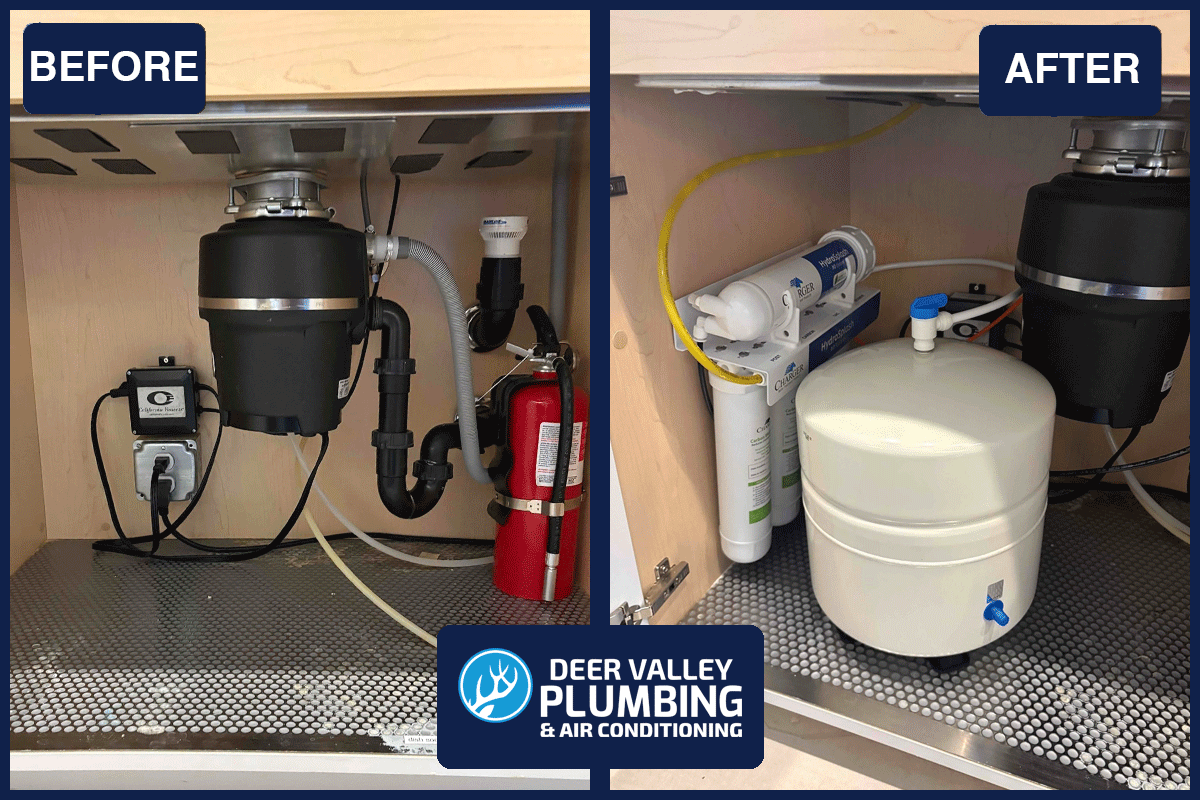
- Reverse osmosis (RO) system: Small prefilter and postfilter canisters, membrane housing, a small tank, and a drain saddle on the sink’s drain line.
- Whole‑house filter: Large canister near the main line or softener, often with a mounting bracket and shutoff bypass.
- Water softener or conditioner: Resin tank and brine tank, often plumbed to a loop common in Phoenix homes.
Once you know the type, check the usual suspects.
O‑Rings and Gaskets: The Number One Culprit
A flattened, cracked, or dry O‑ring lets water escape at the bottom seam.
What to check:
- Remove the sump after depressurizing.
- Inspect the O‑ring or gasket for nicks, flattening, or debris.
- Clean the groove. Even a grain of sand or Teflon shred can break the seal.
- Apply food‑grade silicone grease. Do not use petroleum jelly. It swells rubber.
- Reinstall carefully. Hand‑tighten until the O‑ring seats, then a slight snug with the wrench, not gorilla‑tight.
If the O‑ring sticks, replace it. Always match brand and size. Many Phoenix homes use common 10‑inch housings, but dimensions vary.
Cross‑Threading and Over‑Tightening
A bottom drip after cartridge changes often points to thread damage or warping.
- Cross‑threading: Start the sump by hand and feel for smooth engagement. If it grinds or cocks to one side, back off and realign.
- Over‑tightening: Excess torque compresses the O‑ring unevenly and can crack plastic. Tighten until the gasket kisses the seat, then a quarter turn.
If threads are chewed or the sump wobbles, replace the housing. Once threads deform, leaks usually return.
Hairline Cracks and UV Damage
Clear housings are handy to view sediment but age faster. Look for:
- Spider lines or a single hairline near the base.
- Discoloration or chalky plastic.
- Drips that worsen with pressure spikes or temperature swings.
Do not attempt glue fixes. Replace the cracked part. Install an opaque or UV‑resistant housing if sunlight hits the area.
Pressure Problems: The Hidden Leak Maker
Filters are rated for a pressure range, usually up to 80 psi. Many Phoenix neighborhoods see high static pressure, especially near new developments or at night when demand drops.
What to do:
- Test pressure with a gauge on a hose bib or laundry tap. Check static pressure with no water running.
- Aim for 55 to 65 psi. If you are above 80 psi, a pressure reducing valve is required by most codes.
- Add a small expansion tank if you have a closed system or frequent water hammer.
High pressure can force water past good O‑rings and accelerate canister fatigue.
Clogged Cartridges and Wrong Micron Ratings
Sediment plugs can spike pressure and find the weakest seal.
- Replace sediment filters every 3 to 6 months in Phoenix, where hardness and particulate load are higher.
- If your water slows down before the leak appears, suspect a clogged cartridge.
- Match the micron rating to your water. Start at 5 or 10 microns for whole‑house sediment. Going too fine can starve flow and load the pump or PRV.
RO Systems: Leaks That Pool Under the Tank
Reverse osmosis adds a few unique leak points:
- Tank valve and stem: Check for weeping at the valve threads. Reseat with the right tape and torque if needed.
- Auto‑shutoff valve and check valves: Drips can run along tubing and appear as a bottom leak. Dry each fitting and look for fresh beads.
- Drain saddle: A misaligned saddle or clogged drain line can back up and weep near the cabinet floor.
- Postfilter quick‑connects: Push to release, trim the tubing square with a sharp cutter, and reseat.
Replace aged tubing when you change the membrane if it has kinks or hard spots. RO systems in the Valley often need annual filter changes and a membrane every 2 to 4 years, depending on TDS.
Whole‑House Filters and Mounting Issues
Large housings magnify small alignment mistakes.
- Bracket alignment: A twisted bracket torques the threads and opens a gap at the base.
- Bypass valves: Check for seepage around union joints and the bottom of the valve body.
- Sump gasket seating: Lubricate and seat evenly. Hand‑tighten first.
- Thermal swings: Garages and exterior installs see big temperature changes. Use rated housings and insulate against direct sun.
If you see rust trails, mineral crust, or repeating salt rings under the filter, the leak has been present for weeks. Replace gaskets and consider a new housing if the plastic is brittle.
Water Softeners and Conditioners: Leaks That Look Like Filter Leaks
In Phoenix, many homes have a softener loop. Leaks at the softener often pool under or near the brine tank.
Check these points:
- Bypass valve O‑rings and unions for seepage.
- Brine line connections and float assembly inside the salt tank.
- Drain line to standpipe for clogs or dislodged hooks.
- Cracks in the brine tank base from salt bridging or impact.
Ion exchange softeners rely on resin beads that swap hardness minerals for sodium. If resin escapes into valves, it can jam seals and cause weeping. If you see amber beads in strainers, call for service.
When to Repair vs Replace
Repair is smart when:
- The housing is sound and the O‑ring is the only issue.
- Threads are clean and a proper re‑seat fixes the drip.
- Pressure is corrected and no cracks are visible.
Replace when:
- You find hairline cracks or UV damage.
- Threads are stripped or the sump is out of round.
- The system is past service life and parts are scarce.
Investing in a quality housing with metal threads, a built‑in pressure relief, and a pressure gauge port prevents repeat work.
Preventive Maintenance for Phoenix Water
Local conditions drive the schedule. Phoenix water is typically hard, often in the 12 to 17 grains per gallon range. Higher TDS puts more load on filters and membranes.
Suggested intervals:
- Sediment prefilters: Every 3 to 6 months, sooner if flow drops.
- Carbon filters: Every 6 to 12 months, depending on chlorine taste or odor.
- RO membranes: Every 24 to 48 months, based on TDS readings.
- Softener checks: Annual resin, bypass seal, and brine valve inspection.
- Pressure test: Twice a year. Keep static near 60 psi.
Pro tip: Log filter change dates on the housing with a marker. Replace O‑rings every second or third cartridge change and lube lightly each time.
Hidden Interactions That Cause Leaks
A few cross‑system issues can show up as bottom drips.
- Water heater backflow: Without an expansion tank, thermal expansion increases pressure and makes filters weep.
- Hammering fixtures: Fast‑close faucets can jolt fittings. Add water hammer arrestors where needed.
- Mis‑matched fittings: NPT and BSPP threads do not marry. Use the right adapters.
- Cabinet heat: Dishwashers and trash compactors can warm the space. Heat hardens O‑rings and shortens life.
DIY Fixes You Can Try Today
Follow these steps in order.
- Shut off and depressurize the system.
- Clean and inspect the O‑ring and groove.
- Lube the O‑ring with food‑grade silicone grease.
- Reseat the sump by hand, then snug slightly.
- Replace the cartridge if flow was slow.
- Check static pressure with a $15 gauge. Adjust or replace the PRV if needed.
- Dry the area and monitor for 10 minutes under pressure.
If the leak returns within a day, schedule a service call. Repeating drips often point to cracks, warped housings, or high pressure.
Why Call a Pro for a Persistent Bottom Leak
A licensed plumber does more than swap parts. Expect:
- A full water quality assessment and pressure test.
- Thread inspection, bracket alignment, and valve checks.
- O‑ring replacement with the correct size and lube.
- Repairs to water lines that can cause quality and pressure issues.
- Options for whole‑house filtration, RO, or softeners matched to Phoenix water.
Deer Valley Plumbing & Air Conditioning has served the Valley since 1989 and is BBB accredited. Our team performs same‑day diagnostics, waives the diagnostic charge with service, and offers financing and membership benefits for ongoing protection.
Local Insight: Phoenix Homes and Filter Loops
Many newer Phoenix and Peoria homes include a garage filter or softener loop. You will find two copper or PEX stubs with a bypass. If the loop valves sweat or the bypass O‑rings wear, water can track down the pipe and pool under the filter housing. Inspect the loop first, then the filter.
In 2019, the City of Phoenix noted higher TDS than many U.S. cities. That increases scaling on seals and threads. Regular maintenance stays cheaper than repairing swollen cabinets or replacing damaged flooring.
When to Upgrade Your Filtration Setup
Consider an upgrade if you have any of these issues:
- Frequent leaks or repeated O‑ring failures.
- Nighttime pressure over 80 psi even with a PRV.
- Persistent chlorine taste, white scale, or cloudy ice.
- RO drain noise or frequent tank empties due to clogging.
- Sun‑exposed housing in a hot garage.
Upgrades that help:
- Pressure reducing valve set to 60 psi and a thermal expansion tank.
- Whole‑house sediment prefilter with pressure relief and gauges.
- High‑capacity carbon block for taste and odor.
- RO with quick‑change cartridges and quality fittings.
- Serviceable softener with high‑flow bypass and accessible valves.
Professional Service, Transparent Options
When our technician arrives, they explain every option before work begins. We diagnose the root cause with pressure readings and water tests, then recommend repairs or upgrades. If a water line issue causes the leak, we can repair or replace it the same day. You get one accountable partner for filtration, RO, softeners, and plumbing lines.
Special Offers for Phoenix Homeowners
- Special Offer: $45 Water Filtration Assessment + Same Day Service. Use code WFA45 before it expires. Diagnostic Charge Waived With Service.
- Call (602) 899-0899 or schedule at https://www.deervalleyplumbing.com/ and mention WFA45 to lock in your savings. Conditions and restrictions may apply. Not combinable with other offers.
What Homeowners Are Saying
"We had a failing water heater and called Deer Valley plumbing... and a whole house water filtration system. David did an excellent job of the installation and he was very professional. We're extremely satisfied." –David S., Water Filtration Install
"Total house water filtration system and reverse osmosis system. Plus laundry room sinks install." –Daniel R., Filtration and RO
"They have about a 1-2 day turnaround. Max checked our RO system and ice maker... Very professional, informative and knowledgeable. Problem was fixed!" –Max H., RO Service
"Mike B. is a great technician. I had a RO installed... I am so appreciative of Mike and for his follow up on my issue." –Mike B., RO Install
Frequently Asked Questions
Why is my water filter leaking from the bottom after a cartridge change?
The O‑ring likely shifted, dried out, or has debris on the seat. Remove the sump, clean the groove, replace or lubricate the O‑ring with food‑grade silicone grease, then hand‑tighten and snug slightly.
How tight should a filter housing be?
Hand‑tighten until the O‑ring seats, then add a small snug with the wrench. Over‑tightening warps the sump and causes leaks. If it still leaks, inspect the O‑ring and threads.
What water pressure should I have at home?
Aim for 55 to 65 psi. Most plumbing codes require a pressure reducing valve if static pressure exceeds 80 psi. High pressure turns small seal issues into leaks.
How often should I replace cartridges in Phoenix?
Sediment every 3 to 6 months, carbon every 6 to 12 months, and RO membranes every 2 to 4 years. Hard water and higher TDS in Phoenix can shorten intervals.
When do I need a plumber instead of DIY?
Call a pro if you see hairline cracks, repeated leaks, pressure over 80 psi, or if shutoff valves fail. A licensed plumber can test pressure, repair lines, and set up code‑compliant filtration.
Bottom Line
A water filter leaking from the bottom is usually a seal, crack, or pressure issue. Fix the O‑ring, correct pressure, and replace damaged housings to stop the drip for good. If you need fast help with a water filter leaking from the bottom in Phoenix, we are ready to diagnose and repair the same day.
Ready to Stop the Leak Today?
Call Deer Valley Plumbing & Air Conditioning at (602) 899-0899 or schedule at https://www.deervalleyplumbing.com/. Ask for the $45 Water Filtration Assessment and get the Diagnostic Charge Waived With Service. Serving Phoenix, Scottsdale, Glendale, Peoria, Tempe, Mesa, Surprise, Goodyear, Avondale, and Sun City.
About Deer Valley Plumbing & Air Conditioning
Proudly serving Phoenix since 1989, we are BBB accredited, fully licensed, and insured. Homeowners choose us for same‑day service, upfront pricing, and expert technicians trained in water filtration, softeners, RO, and full‑service plumbing. We back our work with clear warranties, financing options, and Smart Bucks membership benefits for year‑round protection.
Sources8
Source links open in a new tab.
- Happy comment by Faisal Mawrigoogle.com (opens in a new tab)
- Happy comment by Michael Sheldongoogle.com (opens in a new tab)
- Happy comment by Lawrence Finkgoogle.com (opens in a new tab)
- Happy comment by David Pastorgoogle.com (opens in a new tab)
- Top Plumber Sun City West, AZ | Deer Valley Plumbing & Air Conditioning Contractorsdeervalleyplumbing.com (opens in a new tab)
- Services - Deer Valley Plumbing & Air Conditioningdeervalleyplumbing.com (opens in a new tab)
- Service Areas - Deer Valley Plumbing & Air Conditioningdeervalleyplumbing.com (opens in a new tab)
- Who We Serve | Plumber Phoenix, AZ | Deer Valley Plumbing & Air Conditioning Contractorsdeervalleyplumbing.com (opens in a new tab)