
El Mirage, AZ Water Filtration: Whole-House Cartridge Change
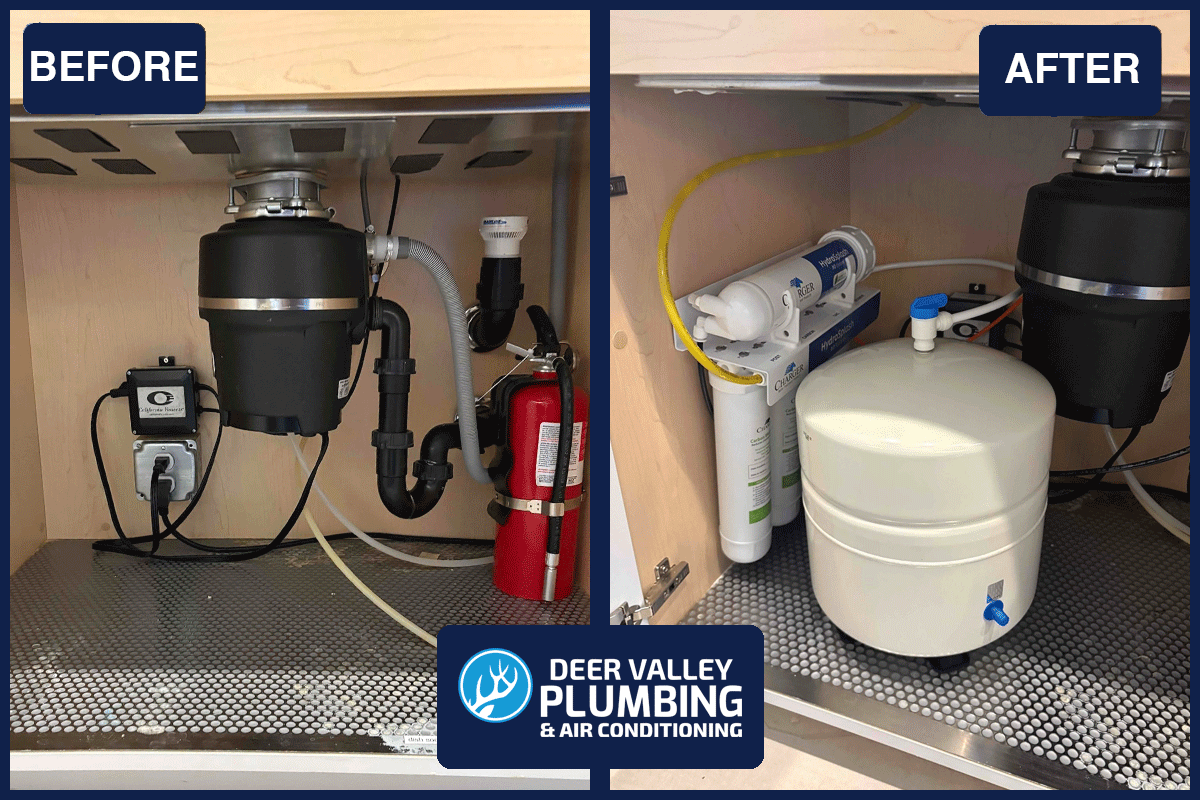
Hard water scale, chlorine taste, and dusty desert lines can wear out cartridges fast. If you want to learn how to change a whole house water filter cartridge without leaks or downtime, this guide makes it simple. Follow the steps below to protect fixtures, improve taste, and keep pressure strong. If you prefer a pro, our Phoenix team offers same-day help and a $45 Water Filtration Assessment.
Why Your Whole-House Filter Matters in Phoenix
Phoenix water is safe to drink, yet many homes deal with hard minerals, chlorine taste, and sediment that can clog aerators and dull fixtures. A whole-house filter traps sediment and certain contaminants before they reach taps, showers, and appliances. Fresh media also helps protect downstream systems like water softeners and reverse osmosis.
Two fast facts to ground your decision:
- Reverse osmosis is a purification process that removes contaminants at the molecular level. It is good for reducing chlorine and hard minerals like calcium and magnesium.
- Ion-exchange softeners swap calcium and magnesium for sodium on resin beads. This process reduces scale that can harm plumbing and appliances.
In Phoenix, seasonal dust and monsoon run-off can increase sediment load. Cartridges work hard here. Staying on schedule with replacement protects pressure, taste, and your plumbing investment.
Tools and Supplies You Will Need
Being prepared prevents leaks and frustration. Gather these items first:
- Replacement cartridge that matches your housing size and micron rating.
- Filter housing wrench that fits your model.
- Food-grade silicone grease for the O-ring.
- New O-ring, if the current one shows damage or flattening.
- Bucket or pan and old towels.
- Adjustable wrench and plumber’s tape for any unions you touch.
- Non-contact voltage tester if your system includes UV. Turn power off before work.
- Permanent marker to label install date and flow direction.
Pro tip: Keep a spare O-ring on hand. Most leaks happen at the seal, not the threads.
Identify Your System and Shutoff Points
Before twisting anything, locate these parts:
- Inlet and outlet shutoff valves. Many systems include a bypass valve too.
- Pressure relief button on the filter head, if equipped.
- Drain or hose bib downstream to help depressurize.
- Mounting bracket and clearance to swing the wrench.
Common housings in Valley homes include 10-inch and 20-inch canisters. Some have clear sumps for a quick visual check. If you see a black cap with a blue button, that button is likely the pressure relief. Always depressurize before opening.
Step-by-Step: How To Change a Whole House Water Filter Cartridge
Follow this method to avoid stuck housings and surprise sprays.
- Shut off water. Close inlet and outlet valves. If you have a bypass, keep it closed for now.
- Depressurize. Press the relief button on the head. Open a cold faucet downstream to release remaining pressure.
- Position a bucket. Place it under the housing. Expect a quart or more of water in the sump.
- Loosen the sump. Use the filter wrench and turn slowly counterclockwise. Support the sump with your free hand as it drops.
- Remove the old cartridge. Pull it straight up. Note any heavy sediment or slime, which signals upstream issues.
- Clean the sump. Rinse with warm water. Wipe the sealing surface. Never use petroleum lubricants or harsh cleaners.
- Inspect the O-ring. If it is nicked, stretched, or flattened, replace it. Lightly coat with food-grade silicone grease. Seat it in the groove without twists.
- Insert the new cartridge. Align any center core with the standpipe. For radial-flow cartridges, ensure top and bottom gaskets are centered.
- Reinstall the sump. Hand tighten until the O-ring seats. Finish with the wrench one quarter-turn. Do not overtighten.
- Restore water slowly. Crack open the inlet valve to fill the sump while watching for leaks. Open the outlet valve when flow stabilizes.
- Flush. Open a downstream tub or laundry faucet for 5 to 10 minutes to clear air and carbon fines.
- Final check. Inspect the housing after 10 minutes, 1 hour, and again after the first hot shower.
Write the date and micron rating on the sump with a marker. Future you will thank you.
Safety and Leak-Prevention Tips
Most problems come from pressure or seals. Use these checks:
- Always depressurize before opening. A pressurized sump can spin and spill.
- Never use pipe dope or Teflon tape on the sump threads. The seal is the O-ring.
- Replace O-rings annually in hot equipment rooms. Heat flattens rubber over time.
- If the sump is stuck, apply even pressure with the wrench. Do not hammer or crack the clear housing.
- After reassembly, bring water on in stages. Closing a faucet and slamming a valve can cause water hammer.
If you see bubbles at the cap seam, air is getting pulled in on startup. Reseat the O-ring and verify the sump is square to the head.
Choosing the Right Cartridge for Phoenix Water
Cartridge choice depends on your goals and your house plumbing.
- Sediment first. A 5 to 20 micron sediment cartridge protects fixtures and softeners from grit. Start coarser if pressure loss is a concern.
- Taste and odor. Activated carbon cartridges reduce chlorine taste and odor. They can also catch some organics.
- Scale strategy. A softener uses ion exchange to reduce scale at every tap. Many homes run a sediment prefilter before the softener.
- Flow rates. Large homes and 20-inch cartridges offer more surface area and less pressure drop. Verify your gallons per minute needs.
- Filter type. Pleated sediment cartridges can be rinsed and reused a few times. Spun poly offers depth filtration but is disposable.
A quick water quality assessment pinpoints the right micron rating and media. Our technicians perform water tests and water-line inspections before recommending equipment.
How Often Should You Change the Cartridge?
There is no one-size schedule. Use this framework:
- Sediment cartridge: 3 to 6 months for most Phoenix homes. Shorten the cycle if you see pressure loss or heavy fines after monsoon.
- Carbon cartridge: 6 to 12 months depending on chlorine levels and household volume.
- Post-filter after a softener: 6 months typical. Watch for pressure loss.
Change sooner if you notice any of these signs:
- Sudden drop in water pressure that is not caused by municipal work.
- Cloudy or gritty water at taps right after startup.
- Chlorine taste or odor returning faster than normal.
- Frequent aerator clogging with scale or sand.
Troubleshooting Common Issues
Even careful DIYers run into quirks. Try these fixes:
- Persistent drip at the sump seam: Clean, regrease, and replace the O-ring. Confirm there is no debris in the groove.
- Housing cross-threading: Back off, align by hand, and thread gently. Never force it with a wrench.
- Black specks in water after carbon change: This is normal carbon fines. Flush for 5 to 10 minutes.
- Air spurts at faucets: Bleed air at the highest faucet first. Then run the tub spout for full flow.
- Recurrent clogs: Consider stepping to a larger housing or a pleated cartridge. A water quality test can reveal upstream sediment or scale.
If you still see leaks after reseating the O-ring, the sump may be cracked. Replace it before returning the system to service.
When a Cartridge Change Is Not Enough
A filter cartridge solves sediment and chlorine taste. Some problems need more.
- White scale on glass and fixtures: That is hard water. Ion-exchange softeners remove calcium and magnesium to protect plumbing.
- Bitter or medicinal taste in drinking water: A reverse osmosis system at the kitchen sink can polish water to bottled-like purity.
- Rust or colored water after line breaks: Sediment staging with a 20 micron followed by a 5 micron can help. Water-line inspection may be needed.
Deer Valley Plumbing & Air Conditioning handles whole-house filters, RO drinking systems, and water softeners. We also repair or replace water lines. One team. One warranty. No extra coordination.
Pro-Level Upgrades That Improve Results
Consider these add-ons if you want fewer changeouts and better flow:
- Dual-stage housings. Start with a coarse sediment filter, then carbon. Cartridges last longer and pressure stays higher.
- 20-inch big blue housings. More surface area for large homes and irrigation tie-ins.
- Pressure gauge and relief set. Know when to change by delta pressure, not guesswork.
- Bypass loop with isolation valves. Service in minutes without shutting the house down.
- Leak detection shutoff. A smart valve can protect your home during vacations and monsoon power flickers.
Our team installs and services these options and provides clear pricing up front.
Maintenance Habits That Extend Cartridge Life
Simple habits help you stay ahead of Phoenix conditions:
- Replace aerator screens twice a year to cut backpressure.
- Keep the equipment room under 120 degrees. Heat ages rubber O-rings.
- Flush irrigation lines after lawn work and monsoon dust events.
- Label every housing with install date and micron size. Track pressure before and after to set the right interval.
If you have a membership, schedule your preventive visits around summer peaks. It is easier to swap media before the hottest stretch.
Compliance, Warranties, and Protecting Your Investment
Manufacturers require proper installation and maintenance for warranty coverage. Keep these records:
- Cartridge part number and micron rating.
- Install date and pressure readings.
- Any O-ring or sump replacements.
Always power down UV lamps when water is off, then restart after flushing. For homes with backflow devices, ensure annual testing is up to date. Our certified technicians handle testing and documentation so you stay compliant.
DIY vs Professional Service: Make the Right Call
Changing a cartridge is a good DIY project if you have proper shutoffs and a sound housing. Call a pro when you see any of the following:
- No working shutoff valves or a corroded bypass.
- Cracked or yellowing clear sumps.
- Recurrent leaks after new O-rings.
- Pressure loss that returns within days.
- Suspicion of damaged or old water lines feeding sediment.
Our licensed technicians perform water quality tests and water-line inspections. After a thorough check, we explain every option and let you choose the best fit. Same-day service is available across Phoenix, Glendale, Peoria, and Scottsdale.
Final Checklist Before You Turn the Water Back On
Run through this list for a clean, leak-free finish:
- O-ring inspected, cleaned, and greased.
- Sump hand tight, then one quarter-turn with wrench.
- Inlet opened slowly while watching for weeps.
- Downstream faucet open to purge air and carbon fines.
- Label updated with date and cartridge type.
- Recheck for moisture in 10 minutes, 1 hour, and after first hot shower.
A careful five-minute check now can save a ceiling repair later.
Special Offer: Water Filtration Savings
Save on expert help today.
- $45 Water Filtration Assessment + Same Day Service.
- Diagnostic Charge Waived With Service.
Prefer a pro to handle your cartridge change or to upgrade to RO or a softener? Call (602) 899-0899 or schedule at deervalleyplumbing.com to claim your assessment while it is active.
What Homeowners Are Saying
"Very pleased with the work Bryant completed. I didn’t expect to have a whole house filter installed the same day as I started seeking a vendor to do the service... Totally professional and his work is something any homeowner would be proud to show off. Bravo Deer Valley." –Phoenix Homeowner
"We had a failing water heater... and we chose to not only replace the water heater but to install a drain pan... and a whole house water filtration system... David did an excellent job of the installation and he was very professional. We're extremely satisfied and we'll continue to use Deer Valley plumbing in the future." –Phoenix Homeowner
"Great company. Very friendly workers. I love the new water system installed same day." –Glendale Homeowner
Frequently Asked Questions
How often should I change a whole-house sediment filter in Phoenix?
Most homes should change sediment cartridges every 3 to 6 months. Heavy water use, monsoon dust, and visible pressure loss are signs to change sooner.
Which micron rating is best for my main filter?
Start with 10 to 20 micron for whole-house sediment control to protect flow. If you still see grit, step down to 5 micron and monitor pressure.
Do I need both a whole-house filter and a softener?
Yes, in many cases. The filter catches sediment and chlorine. The softener reduces hard minerals that cause scale on fixtures and inside pipes.
Why does my water sputter after a cartridge change?
Air is trapped in the lines. Open the highest faucet to bleed air, then run a tub spout for 5 to 10 minutes to flush carbon fines and stabilize flow.
When should I call a plumber instead of DIY?
Call if shutoff valves do not work, the sump is cracked, leaks persist after a new O-ring, or pressure loss returns quickly. A pro can test water and lines.
Wrapping Up
Now you know how to change a whole house water filter cartridge safely, prevent leaks, and protect water pressure. If you want expert testing and a tailored plan for Phoenix water, we are here to help.
Call or Schedule Now
Ready for same-day help or an upgrade? Call (602) 899-0899 or book at deervalleyplumbing.com. Ask for the $45 Water Filtration Assessment. Diagnostic charge waived with service. Keep your water clean and your plumbing protected.
Call (602) 899-0899 or visit deervalleyplumbing.com to schedule your $45 Water Filtration Assessment today. Same-day service available across Phoenix and nearby cities.
About Deer Valley Plumbing & Air Conditioning
Serving Phoenix since 1989, Deer Valley Plumbing & Air Conditioning is BBB accredited, fully licensed, and insured. Homeowners choose us for same-day service, courteous techs, and clear pricing. We install and service whole-house filters, RO systems, and water softeners, and we back it up with full plumbing capability for water lines and repiping. Local expertise, honest options, and quality workmanship every time.
Sources8
Source links open in a new tab.
- Happy comment by Vicki Acciarigoogle.com (opens in a new tab)
- Happy comment by Jordan Krileygoogle.com (opens in a new tab)
- Happy comment by James Mairgoogle.com (opens in a new tab)
- Happy comment by hope hartgoogle.com (opens in a new tab)
- Top Plumber Sun City West, AZ | Deer Valley Plumbing & Air Conditioning Contractorsdeervalleyplumbing.com (opens in a new tab)
- Services - Deer Valley Plumbing & Air Conditioningdeervalleyplumbing.com (opens in a new tab)
- Service Areas - Deer Valley Plumbing & Air Conditioningdeervalleyplumbing.com (opens in a new tab)
- Who We Serve | Plumber Phoenix, AZ | Deer Valley Plumbing & Air Conditioning Contractorsdeervalleyplumbing.com (opens in a new tab)